Hey there, amazing social workers and aspiring global citizens! Have you ever wondered what it would be like to take your incredible skills and compassionate heart to another corner of the world, making a real difference where it’s needed most?
I’ve personally seen how stepping out of your comfort zone and embracing an international experience can completely transform your perspective, not just professionally but personally too.
Imagine diving deep into new cultures, understanding diverse community needs, and tackling universal challenges like poverty or social inequality with fresh eyes and innovative approaches.
With our world more interconnected than ever, these unique programs offer an unparalleled chance to boost your cultural competence, expand your network, and truly shape the future of social justice globally.
Ready to see how these life-changing opportunities can truly elevate your practice? Let’s explore the possibilities and get you started!
Embracing the Global Perspective: Why International Social Work Matters
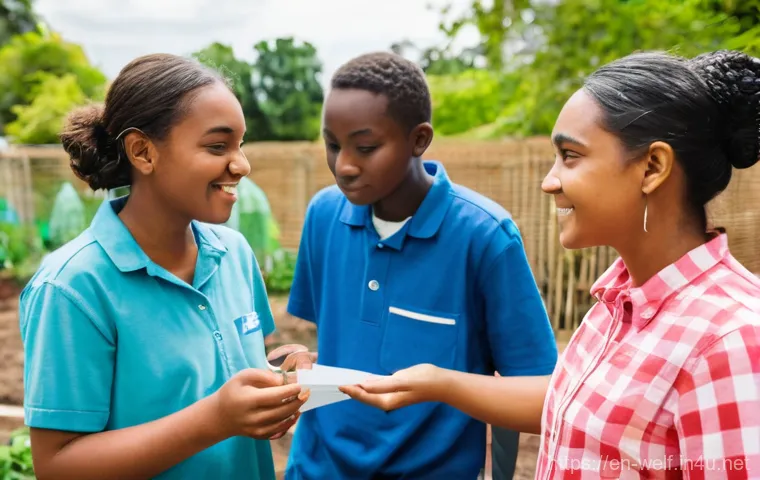
You know, I distinctly remember a moment during my first overseas placement, working with a community development project in rural Uganda, where everything just clicked.
It wasn’t just about the tasks I was performing; it was about the profound shift in my own understanding of social justice and human dignity. Suddenly, the theories I’d learned in university felt incredibly alive, tangible, and infinitely more complex when viewed through the lens of a completely different cultural context.
It’s easy to get comfortable in our own familiar systems, isn’t it? But stepping beyond those borders, even just for a few months, completely shatters preconceived notions and forces you to re-evaluate everything you thought you knew.
This isn’t just a fancy line for your LinkedIn; it’s a fundamental recalibration of your professional compass. You start to see how global forces, economic disparities, and historical legacies truly shape individual lives and communities, creating challenges that demand a more nuanced, globally informed approach than many of us are taught to expect.
It’s an awakening, a genuine realization that our profession’s core values – empathy, justice, service – are universal, yet their manifestations are incredibly diverse.
I truly believe that every social worker, at some point in their career, should consider this expansive leap. It doesn’t just broaden your horizons; it deepens your very capacity to serve.
The insights you gain from navigating unfamiliar systems, collaborating with international partners, and adapting your skills to new environments are absolutely invaluable.
This experience reshapes your empathy, sharpens your critical thinking, and instills a resilience you simply can’t cultivate staying put.
Beyond Borders: Expanding Your Professional Toolkit
The Global Classroom: Learning from Diverse Communities
Finding Your Niche: Diverse Pathways to Global Impact
When I first started looking into international social work, the sheer number of options felt a little overwhelming, to be honest. It wasn’t just “volunteering overseas”; there were so many different avenues, each with its own unique flavor and impact.
From humanitarian aid work in crisis zones with organizations like Doctors Without Borders or the International Federation of Red Cross and Red Crescent Societies, to long-term community development projects focused on sustainable change with groups like Habitat for Humanity or local NGOs, the possibilities are vast.
Then you have policy advocacy at the UN or within international development agencies, focusing on systemic change on a grand scale. I even had a friend who spent a year in Cambodia working on a microfinance initiative, which, while not strictly “social work” in the traditional sense, directly impacted the economic empowerment of vulnerable women.
The key, I’ve found, is to really sit down and reflect on what your strengths are, what populations you’re passionate about serving, and what kind of environment you thrive in.
Do you love direct client work, or are you more drawn to research and program evaluation? Are you comfortable with high-stress, rapid-response situations, or do you prefer slower, more integrated community building?
There’s a perfect fit out there for you, whether it’s supporting refugees in Europe, developing youth programs in South America, or contributing to health initiatives in Africa.
This isn’t a one-size-fits-all journey, and that’s the beauty of it. Each path offers a distinct set of challenges and rewards, molding your professional identity in ways you never anticipated.
Don’t be afraid to explore, to network, and to ask a lot of questions.
From Humanitarian Aid to Policy Advocacy: Understanding the Landscape
Aligning Your Passions with Global Needs
Navigating the Practicalities: Funding Your International Journey
Let’s be real, the thought of funding an international experience can be a major roadblock for many, and it certainly was for me initially. It’s not just the flight; it’s accommodation, living expenses, insurance, and sometimes program fees.
But here’s the good news: there are far more resources available than you might imagine if you know where to look. I personally leveraged a combination of strategies.
I applied for several scholarships specifically designed for international service and academic pursuits, and surprisingly, landed one from a lesser-known foundation tied to my university’s international studies department.
Don’t overlook these smaller, niche opportunities! Many larger organizations, like Rotary International, Fulbright, or even some national government programs, offer significant grants for professionals looking to gain international experience.
Beyond scholarships, consider fundraising. I know, it sounds daunting, but even a small online campaign or local community event can make a huge difference.
I once hosted a small art auction with local artists, and the proceeds covered a good chunk of my travel costs. Another avenue is seeking out programs that offer stipends or cover living expenses as part of the placement, often found with larger NGOs or UN agencies.
Don’t forget about personal savings, and yes, sometimes a side hustle helps. Think creatively – perhaps teaching English online for a few hours a week, or freelancing your social work expertise in a different capacity before you leave.
It’s an investment in yourself and your career, and with a bit of planning and persistence, it’s absolutely achievable. The initial financial hurdle can feel monumental, but the rewards truly outweigh the temporary strain.
Unearthing Scholarship and Grant Opportunities
Creative Funding Strategies: Beyond Traditional Loans
| Opportunity Type | Key Focus Areas | Typical Duration | Examples of Organizations |
|---|---|---|---|
| Humanitarian Aid | Emergency response, disaster relief, refugee support, immediate needs | Short-term (weeks to 6 months) | Doctors Without Borders, International Red Cross, UNHCR |
| Community Development | Sustainable projects, capacity building, poverty reduction, education, health | Medium-term (6 months to 2 years) | Habitat for Humanity, local NGOs, Peace Corps (USA) |
| Policy & Advocacy | Systemic change, human rights, international law, research, lobbying | Medium to Long-term (1 year +) | UN agencies (UNICEF, WHO), Amnesty International, Oxfam |
| Clinical/Direct Service | Counseling, therapy, direct client support in international settings | Varied (often 3 months to 1 year) | Médecins du Monde, some faith-based organizations, private clinics |
Beyond the Resume: Unpacking the Personal Growth
While the professional advantages of international social work are clear, what really sticks with you, what fundamentally changes you, is the personal growth.
I can honestly say that my time living and working abroad stretched me in ways I never thought possible. Imagine navigating a public transport system where you don’t speak the language, or trying to explain a complex social issue to someone whose cultural framework is entirely different from your own.
These daily challenges, small and large, force you to develop an incredible sense of adaptability and resilience. You learn to embrace ambiguity, to communicate not just with words but with gestures, patience, and genuine intent.
I remember a particularly frustrating day trying to set up a community workshop when everything that could go wrong, did. The venue changed last minute, the translator was delayed, and the materials didn’t arrive.
Instead of getting upset, I had to completely pivot, think on my feet, and rely on the kindness of local strangers. It was exhausting but ultimately incredibly empowering.
You return home with a much broader perspective on global issues, yes, but also a much deeper understanding of yourself. You become more self-aware, more confident in your problem-solving abilities, and far more compassionate towards others who are navigating unfamiliar territories.
It’s like a fast-track course in emotional intelligence and cultural humility, and trust me, those are skills that serve you well in every single aspect of life, not just your career.
Cultivating Unshakeable Resilience and Adaptability
A Deep Dive into Self-Awareness and Cultural Humility
Building Bridges, Not Walls: Cultural Competence in Action
Cultural competence isn’t just a buzzword you hear in lectures; it’s a living, breathing skill that truly comes alive when you’re immersed in a different culture.
Before my first international stint, I thought I was pretty culturally aware. Boy, was I wrong! I quickly learned that understanding goes far beyond knowing customs or avoiding faux pas.
It’s about developing a profound respect for different worldviews, recognizing your own inherent biases, and approaching every interaction with genuine curiosity and a willingness to learn.
I recall a time when a local community leader patiently explained to me why a proposed intervention, which seemed perfectly logical from my Western perspective, would actually be counterproductive in their village due to deeply held traditional beliefs.
Instead of pushing my agenda, I listened. Truly listened. And by doing so, we collaboratively developed a solution that was not only more effective but also culturally resonant and sustainable.
This experience taught me that effective social work, especially internationally, isn’t about imposing solutions, but about co-creating them with the communities you serve.
It’s about stepping back, observing, asking open-ended questions, and allowing yourself to be taught. This kind of deep, experiential learning transforms your practice, making you a far more effective advocate and collaborator, not just abroad, but also in your own backyard, where diverse communities exist side-by-side.
You learn to appreciate the strength in difference and the power of truly inclusive engagement.
From Theory to Practice: Navigating Cultural Nuances
The Art of Co-Creation: Empowering Local Voices
Making a Real Difference: Success Stories from the Field
When I reflect on the impact of international social work, my mind often goes to Sarah, a bright young woman I worked with in a vocational training program in Ghana.
She had faced significant barriers to education and employment, and initially, her confidence was incredibly low. Through a combination of tailored support, skills training, and connecting her with local mentorship, we saw a remarkable transformation.
Seeing her graduate from the program, secure a job at a local textile cooperative, and then proudly tell me she was saving up to help her younger siblings attend school – that’s the kind of tangible difference that stays with you.
It’s not always about grand, sweeping changes; sometimes it’s about these individual triumphs, these moments where you see the direct impact of your efforts.
Another instance that comes to mind is a small team I was part of in rural India, helping to implement a clean water initiative. The challenge was immense, but by working hand-in-hand with village elders and local engineers, we managed to install several community water filters.
The look on the faces of the children, no longer having to trek miles for unsafe water, was priceless. These aren’t just feel-good anecdotes; they represent the heart of our profession.
They are powerful reminders that with dedication, cultural sensitivity, and collaborative spirit, social workers can absolutely be catalysts for profound, positive change across the globe.
These stories fuel your passion and remind you why you chose this path in the first place.
Individual Triumphs: Catalyzing Personal Transformation
Community Impact: Collective Efforts for Sustainable Change
Wrapping Things Up
And so, as we pull back from this deep dive into the incredible world of international social work, I hope you’re feeling as inspired and energized as I am. It’s truly more than just a job; it’s a profound journey of discovery, impact, and unparalleled personal growth. From the initial spark of curiosity to the transformative moments in the field, every step along this path is etched with purpose. Remember, the world is waiting for your unique perspective and passion. Don’t let fear or uncertainty hold you back from embracing an experience that will undoubtedly redefine your professional identity and enrich your life in ways you can scarcely imagine. Take that leap, trust in your skills, and let your empathy lead the way.
Useful Information You Won’t Want to Miss
1. Networking Is Your Golden Ticket – Start Now! Seriously, I cannot stress this enough. International social work often thrives on connections, and the sooner you start building your network, the better. Attend online webinars and conferences, join professional LinkedIn groups focused on global development or specific regions, and connect with professors or alumni who have international experience. Don’t be shy about reaching out for informational interviews! I remember how a chance conversation with a guest speaker at a university event led me to my first major internship. People who have walked this path before you are often incredibly generous with their time and advice. They can share insights on navigating cultural nuances, identifying reputable organizations, and even practical tips on things like visa processes or securing affordable housing abroad. Think of every connection as a potential mentor or a door to an unforeseen opportunity. The world of international aid and development is smaller than you think, and a strong network will not only open doors but also provide invaluable support and guidance throughout your journey. Cultivate genuine relationships, show authentic interest, and always follow up with a thank you note. It truly makes a difference. You might be surprised where a simple connection can lead, offering you a unique perspective or a direct path to an organization you’ve only dreamed of working with. It’s about building a community of like-minded individuals who share your passion for global change.
2. Upskill Smart: What Truly Matters in the Field. While your social work degree provides a fantastic foundation, consider what supplementary skills will make you indispensable. Language proficiency, especially in languages relevant to regions you’re interested in, is a huge plus. Beyond that, think about practical skills like project management, data analysis, grant writing, or even basic public health principles. Many international roles require a blend of direct practice and administrative or research capabilities. I personally took an online course in monitoring and evaluation, which proved incredibly useful in demonstrating impact for funding reports. Don’t underestimate the power of digital literacy either; being adept with various software, communication platforms, and remote work tools is more critical than ever. Consider certifications in specific areas like trauma-informed care, humanitarian logistics, or peacebuilding, which can differentiate you in a competitive market. These aren’t just resume boosters; they are tools that will genuinely enhance your effectiveness and adaptability in diverse international settings. Investing in these skills not only makes you a more attractive candidate but also ensures you’re better equipped to tackle the complex challenges you’ll encounter. It’s about being prepared for the multi-faceted nature of global work, where you often wear many hats and need to be resourceful and self-sufficient. Every additional skill you acquire adds another layer to your capacity to serve and contribute meaningfully.
3. Mentorship is Your Compass – Find a Guide! Navigating the complexities of international social work can be daunting, and having a mentor who has already walked the path is absolutely invaluable. A good mentor can provide personalized advice, help you interpret difficult situations, and offer emotional support when you encounter challenges. I vividly remember leaning on my mentor during a particularly tough period when I felt overwhelmed by cultural differences and project setbacks. Her insights and encouragement were a lifeline. Seek out individuals who are not just experienced but also genuinely committed to your growth. This could be a former professor, a senior colleague, or someone you connect with through your professional network. Don’t be afraid to formally ask someone to be your mentor; most experienced professionals are flattered and eager to give back. A mentor can help you set realistic expectations, understand career trajectories, and even troubleshoot specific ethical dilemmas you might face. They can also offer perspectives on self-care and avoiding burnout, which is a very real concern in high-stress international environments. This relationship is a two-way street; be prepared to listen, learn, and be proactive in seeking guidance. Their wisdom can save you from making common mistakes and accelerate your learning curve significantly, making your journey smoother and more impactful. It’s like having a seasoned navigator on your team as you explore new territories.
4. Research Deeply, Choose Wisely: Organizations Matter. Not all organizations are created equal, and doing your homework is paramount. Look beyond glossy websites. Investigate their mission, values, and, crucially, their ethical practices. Research their local partnerships – do they genuinely empower local communities, or do they perpetuate a ‘savior’ complex? Review their financial transparency, impact reports, and employee reviews on sites like Glassdoor. Look for organizations with a strong commitment to cultural humility and sustainable development. I’ve heard countless stories (and experienced a few myself) where organizations promise one thing but deliver another, leaving volunteers or staff feeling exploited or ineffective. Focus on organizations that align with your personal values and professional goals. Consider their track record in staff support, safety protocols, and opportunities for professional development. Are they known for treating their international and local staff equitably? Don’t hesitate to reach out to past volunteers or employees if you can find them – their candid insights can be invaluable. A well-chosen organization will not only provide a meaningful experience but also uphold your professional integrity and foster genuine, lasting impact. It’s about ensuring your efforts contribute to real, positive change, rather than inadvertently causing harm or simply maintaining the status quo in a superficial way. Your choice of organization profoundly shapes your experience and the legacy of your work.
5. Prioritize Self-Care and Managing Expectations. International social work can be incredibly rewarding, but it’s also emotionally and physically demanding. It’s absolutely crucial to build robust self-care strategies into your routine from day one. This isn’t a luxury; it’s a necessity for sustainability in the field. Identify what truly recharges you, whether it’s exercise, connecting with loved ones back home, journaling, or pursuing hobbies that offer a mental escape. I learned the hard way that ignoring burnout only leads to diminished effectiveness and personal distress. Also, cultivate realistic expectations. You won’t solve all the world’s problems overnight, and progress can often be slow and incremental. There will be frustrating days, bureaucratic hurdles, and moments of profound sadness. Acknowledging these realities upfront helps prevent disillusionment. Embrace flexibility and an open mindset, knowing that things rarely go exactly as planned. Celebrate small victories and learn from setbacks without letting them define your entire experience. Connect with fellow international workers; shared experiences can be incredibly validating and provide a crucial support system. Remember why you started this journey and allow yourself grace through its inevitable ups and downs. Your well-being is your most important asset, allowing you to sustain your passion and commitment to making a positive difference in the world over the long haul. A resilient spirit, nurtured by diligent self-care, is essential for truly thriving.
Key Takeaways
Embarking on international social work is a transformative journey, offering unparalleled personal and professional growth. It demands cultural competence, adaptability, and resilience, skills honed through direct immersion and navigating diverse challenges. While funding and practicalities require proactive planning, numerous resources exist to support your venture. Ultimately, it’s about making a profound difference, fostering global understanding, and co-creating solutions with communities, leaving you with invaluable experiences that redefine your impact on the world.
Frequently Asked Questions (FAQ) 📖
Q: Why should I even consider taking my social work skills internationally? Isn’t it just easier to stay where I am?
A: Oh, I totally get that thought! It’s natural to feel comfortable in your current setting. But honestly, from what I’ve seen and experienced myself, stepping onto the global stage as a social worker is one of the most transformative decisions you can make.
It’s not just about adding a line to your resume; it’s about profoundly expanding your worldview and supercharging your professional toolkit. When you work internationally, you’re suddenly immersed in entirely new cultural contexts, facing challenges that might feel familiar but often require completely different solutions.
I remember my first time working in a developing country—the sheer ingenuity and resilience of the communities taught me more about problem-solving than any textbook ever could.
You’ll gain an unparalleled understanding of global interconnectedness, develop incredible cultural competence, and refine your ability to adapt on the fly.
Plus, the network you build with fellow passionate professionals from all corners of the earth? Absolutely priceless. It truly elevates your practice from local to global, giving you a unique perspective that you just can’t get any other way, and helps you contribute to addressing global issues like health disparities, poverty, and human rights.
Q: I’m interested, but I’m worried I don’t have enough experience or the “right” qualifications. What do international social work programs actually look for?
A: That’s a super common concern, and it’s totally valid to wonder if you measure up! But here’s the good news: while advanced degrees and years of experience are always valued, many international programs are surprisingly open to social workers at various stages of their careers.
What they really look for often goes beyond just your CV. They want to see genuine passion, adaptability, resilience, and a deep respect for diverse cultures.
Think about it – working abroad often throws curveballs, so demonstrating you can handle unexpected situations with grace and a positive attitude is huge.
Many entry-level positions or volunteer opportunities simply require a Bachelor’s degree in social work (BSW) or a related field, along with a keen willingness to learn and contribute.
Some programs and organizations, especially for leadership roles or more complex interventions, might prefer a Master’s (MSW) or a few years of direct practice post-MSW.
Many MSW programs offer courses related to cross-cultural communication and social justice advocacy, and some even have specialized international social work education or certificate programs.
But honestly, if you’ve got a compassionate heart, an open mind, and a strong work ethic, you’re probably already more qualified than you think! Don’t let imposter syndrome hold you back from exploring these incredible paths.
Q: With so many different countries and organizations, how do I even begin to choose the right international social work opportunity for me?
A: This is where the real adventure begins, isn’t it? It can feel a bit overwhelming with all the amazing options out there, but trust me, finding your perfect fit is absolutely doable.
My biggest piece of advice is to start with a deep dive into self-reflection. What are your core values? What populations are you most passionate about serving – maybe refugees, children, or communities facing specific issues like food scarcity or gender-based violence?
Are you drawn to direct service, policy advocacy, community development, or something else entirely? Think about the kind of cultural immersion you’re looking for—a bustling urban environment, a rural community, or somewhere in between?
Then, consider practical aspects like the length of commitment, your financial situation (some programs are paid, others volunteer-based, and some even offer stipends!), and any language skills you might have or be willing to develop, as language proficiency can make you much more competitive.
I’ve found that researching organizations whose missions genuinely resonate with you is key. Look at their past projects, their impact stories, and don’t be afraid to reach out to former participants for their unfiltered experiences.
Organizations like the United Nations, Save the Children, and the International Federation of Social Workers (IFSW) are excellent places to start researching reputable programs and potential employers.
It’s a journey of discovery, both outward and inward, and the “right” opportunity is the one that aligns best with your personal and professional aspirations.